Summary
🌿 Tambopata: Complete Guide for Travelers Seeking Nature, Culture, and Adventure
🧭 Introduction: Why Tambopata?
Tambopata in the Peruvian Amazon continues to be a recurring theme among travelers. People talk about its unique biodiversity and the experiences it offers. This place in Madre de Dios attracts those looking for something more than a typical trip.
The national reserve combines pristine nature with ancient cultures in an interesting way. It’s an option for responsible tourism that leaves its mark. Visitors find deep connections with the natural environment here that are rarely replicated elsewhere.
Reasons for choosing this destination include its privileged geographical location and its sustainable approach. It’s not just a jungle; it’s a living ecosystem where every element plays its part. The variety of species and landscapes surprises even the most experienced travelers.
The transformative experience that Tambopata promises is based on authentic interactions with the local environment. From hikes along hidden trails to encounters with native communities, every activity has a purpose. The balance between conservation and tourism is carefully managed here.

🗺️ Geographic Area and Strategic Location
• Location: Southeast Peru, in the province of Tambopata, department of Madre de Dios.
• Area: 274,690 hectares of tropical rainforest.
• Altitude: Between 200 and 400 meters above sea level.
• Climate: Humid subtropical, with temperatures between 10°C and 38°C.
• Main rivers: Tambopata, Madre de Dios, Malinowski, and Heath.
🔍 History and Discovery of Tambopata
The history of Tambopata has several key points worth mentioning. The name comes from two Quechua words combined. ‘Tambo’ means inn or resting place according to ancient records. On the other hand, ‘pata’ specifically refers to height or elevated area in that same native language.
As for the original inhabitants of the area, we are primarily talking about three distinct indigenous groups. The Ese’Eja established communities near major rivers long before the arrival of Europeans. The Harakbut occupied more forested and mountainous areas, according to recent anthropological studies. There were also the Matsigenka, who lived in areas that are now part of the current reserve.
During the Spanish colonial period, the region remained relatively untouched due to its difficult geographical access. Mass exploitation arrived much later with the rubber boom at the beginning of the 20th century, basically to put it briefly. Foreign and local companies established temporary camps to extract the natural rubber without any environmental controls at the time.

✈️ How to Get to Tambopata
From Lima or Cusco:
• By Air: Daily flights to Puerto Maldonado (1 hour 30 minutes from Lima, 45 minutes from Cusco).
• By Land: From Cusco via the Interoceanic Highway (10–12 hours).
From Puerto Maldonado:
• By Land: Bus or taxi to the river port.
• By River: Motorized boat ride (30 minutes to 4 hours depending on the lodge).
🧪 Latest Research and Conservation
• Discovery of new species: More than 30 species discovered since 2016 thanks to the Wired Amazon program.
• Reforestation: Restoration of 700 hectares degraded by illegal mining with 750,000 native plants.
• Satellite monitoring: Use of platforms such as Geobosques and Earth Map to detect deforestation.
🧳 Important Tips for Visiting Tambopata
• Best time: Dry season (May to October).
• Recommended vaccinations: Yellow fever.
• What to bring: Light clothing, waterproof boots, insect repellent, sunscreen, camera.
• Access: Only through authorized tour operators.
🧳 Important Tips for Visiting Tambopata
The best time to visit Tambopata is usually the dry season, between May and October. A yellow fever vaccination is recommended before your trip. Pack light clothing, waterproof boots, insect repellent, and sunscreen. Bringing a camera is almost mandatory to capture the landscape. Access to the area is only permitted with authorized and registered tour operators.
It’s important to plan ahead because heavy rains complicate the trails outside of these months. Local guides know how to manage the most interesting tours without disturbing the ecosystem. The jungle can be challenging, but it’s worth every effort when you see the animals in their natural habitat.
🏞️ Tourism in Tambopata
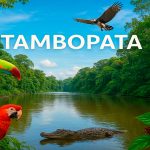
Tourism in Tambopata has become one of the most sought-after experiences for travelers who want to connect with the Amazon rainforest. Ecotourism is at the heart of the region, offering activities such as jungle hikes, river navigation, and wildlife watching, where visitors can spot exotic birds, monkeys, and even caimans.
Among the main attractions, the stunning Sandoval Lake stands out, known for its calm waters and giant river otters. The Chuncho and Colorado Macaw Clay Licks offer a breathtaking natural show, where hundreds of colorful macaws gather at the clay cliffs. Another highlight is Tres Chimbadas Lake, perfect for birdwatching and peaceful canoe rides.
For those seeking an immersive stay, Tambopata is home to world-renowned eco-lodges such as the Tambopata Research Center, Refugio Amazonas, and Posada Amazonas, which combine comfort with authentic rainforest adventures.
👥 Characteristics of the nearby population
The provincial capital is Puerto Maldonado, a city that concentrates much of the area’s economic and social life. It is home to approximately 103,580 people, with a predominantly young population with an average age of 23.
Various ethnic groups coexist in this region, such as the Ese’Eja indigenous people, as well as mestizos and Andean migrants who arrived in search of new opportunities.
The local economy is primarily sustained by tourism, agriculture, Brazil nut harvesting, and fishing, activities that reflect the close relationship of its inhabitants with nature and the resources of the Amazon.
🎭 Cultural Activities and Community Experiences
In Tambopata, culture comes alive through direct interaction with local communities. One of the most enriching experiences is visiting the Ese’Eja communities, where travelers can take part in handicraft workshops, learn about traditional fishing techniques, and discover the wisdom of natural medicine passed down through generations.
Ancestral rituals are also an important part of the journey. These include ceremonies with medicinal plants and the oral storytelling of Amazonian myths and legends, offering a deeper understanding of the spiritual bond that Indigenous peoples maintain with nature.
Another highlight is the local gastronomy, where visitors can savor dishes prepared with Brazil nuts, Amazonian river fish, and a wide variety of exotic fruits—flavors that reflect the richness and diversity of the rainforest.
🌿 Flora and Fauna of Tambopata
The Tambopata Reserve is one of the most biodiverse places on Earth—a true paradise for nature lovers.

In terms of fauna, more than 648 bird species have been recorded, including the colorful macaws, the powerful harpy eagle, and the unique hoatzin. The region is also home to around 169 species of mammals, such as the majestic jaguar, the tapir, the loud howler monkey, and the fascinating giant river otter. In addition, the area shelters countless reptiles and amphibians, from caimans and snakes to brilliantly colored poison dart frogs.
The flora is equally impressive, with over 1,200 species of vascular plants creating lush and vibrant landscapes. Towering hardwood trees like mahogany, cedar, and the resilient shihuahuaco dominate the forest, while delicate orchids, bromeliads, lianas, and vines add to the Amazon’s beauty and ecological richness.

You might also like