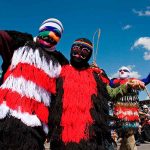
Cusco has an important archaeological wealth of Peru, this region has many tourist sites to visit. The customs of Cusco make it very special and these are festivals that are celebrated year after year. It is also important to mention its typical dishes prepared on special occasions, ancient rituals and long pilgrimages. You can take a tour of all the Cusco customs and traditions, discover this town that has not lost its roots. That is why it is called the historical capital of Peru.

CUSTOMS OF CUSCO THAT WILL CAPTIVATE YOU
These are part of the customs and traditions of Cusco due to its peculiar way of celebrating them. Know some of these:
Summary
CUSQUEÑO CARNIVAL
The Cusco Carnival, which is celebrated in February or March of each year, is a festival of color, music and joy. During this celebration, the streets are filled with parades, dances and “yunzas” (Capulí trees loaded with gifts that are cut down amid dances and songs). The Cusco carnival is a mix of Andean and colonial influence.
HOLY WEEK DISHES
Holy Week in Cusco has its own tradition, processions, pilgrimages and the reflective nuance of the date, a particular tradition that draws attention to this date is the preparation of the 12 dishes of Good Friday, with its own products, from the jungle and coast of Peru. As part of the reflection, on this day the people of Cusco fast and at home they get up early to go to the markets to buy the supplies for the preparation of the Good Friday dishes. Six sweet and six savory dishes are usually prepared, without using sheep or beef meat.
THE PILGRIMAGE TO THE MR OF QOYLLURIT’I

This is a religious event celebrated in May or June of each year, a pilgrimage carried out by approximately 80,000 people from the surroundings of Cusco, to the foot of Sinakara (sanctuary of the Lord of Qoyllurit’i), these are customs that are part of the Intangible Cultural Heritage of The humanity.
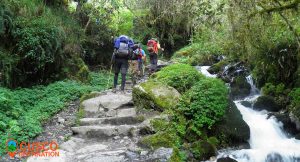
Participants have to go to the Ocongate district, then to Mahuayani, where the walk to the foot of the snow-capped mountain begins. Throughout the entire journey, the dances and rituals are the protagonists of this pilgrimage.
CORPUS CHRISTI IN CUSCO

It attracts a large number of local and foreign visitors, who have the opportunity to witness and participate in this unique religious and cultural festival. It is a sample of the rich heritage and traditions that are kept alive.
In Cusco, the procession of saints is a historical and religious celebration of great importance. Its origin dates back to the time of the Tahuantinsuyo empire, when the Quechua people honored the mummies of the Incas in an annual procession. However, with the arrival of the Spanish and the introduction of Catholicism, the ceremony underwent a fundamental change.
Today, the procession of saints is an impressive event in which religious images parade adorned with great splendor. The faithful and admirers greet them with devotion and respect, turning this celebration into a living testimony of the fusion between ancient Inca culture and the Catholic religion.
INTI RAYMI

This is a festival typical of Cusco, it means “Festival of the Sun” and is celebrated every year on June 24. The festivity includes staging from Coricancha to Saqsayhuaman, where actors dress in Inca costumes to pay tribute to the Sun god.
The Inti Raymi takes place mainly in three points of the city: Coricancha, the Plaza de Armas and Sacsayhuamán. The celebration begins very early, in the first two stages admission is free, those who want to see the performance in Sacsayhuamán have to have an entry ticket.
NATIONAL HOLIDAYS
The National Holidays are celebrated on July 28 and 29 of each year, commemorating the independence of Peru. In Cusco, these days are for celebration, parades and cultural events. The Plaza de Armas becomes the epicenter of the festivities, where military ceremonies, school parades and folk dances take place.
AUGUST MONTH OF PACHA MAMA

Customs and traditions that originated before the arrival of the Spanish. One of them is the veneration of Pachamama (earth deity), which is carried out in important places in the city, such as Sacsayhuamán, Huanacaure, Picol, Pachatusan, which are Apus in Cusco.
Cusqueños and tourists offer an offering to Mother Earth, the offering is composed of various objects such as llama fetus, coca leaf, chicha, wine, flowers, candies, among others, which are blessed by an Altomisayoq, as a final act They are burned. If you want to participate in these rituals, you can contact us and we will organize a session with you Cusco Destination Contact.
Something peculiar is “Matrimoniarse” is used in August in Cusco to translate the term “Kasarakuy”, and is that in this month couples celebrate their love in the Andean style. It is a kind of renewal of vows for married people and a ritual prior to the Christian religious wedding, for couples who have not yet married.
If you visit Huancarani, a small town on the outskirts of the city, it is likely that you can participate in this tradition. For the ceremony, typical costumes are designed for the bride and groom, and both are celebrated for two days. All this in the middle of dancing, food like guinea pig and baked suckling pig, and typical drinks like chicha.
ALL SAINTS’ DAY AND DAY OF THE DEAD
November 1 and 2 are All Saints’ Day and All Souls’ Day, respectively. During these days, Cusco families visit cemeteries to honor their deceased loved ones, bringing flowers, candles and offerings. The preparation of typical dishes such as “pan wawa” (baby-shaped bread) and “pan caballe” (horse-shaped bread) is also common. This festival provides the opportunity to learn about Cusco traditions and customs related to life and death.
THE CHRISTMAS SANTURANTIKUY
A Cusco custom that takes place during the Christmas holidays, which takes place every December 24, every year since the 16th century in the main square of Cusco. It is a traditional fair, selling saints, herbs, artistic creations with Christmas motifs, and currently also crafts of all kinds.

You might also like