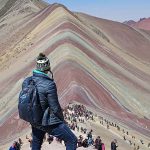
Rainbow Mountain Peru, also known as Vinicunca, is one of Peru’s most impressive natural wonders. Located in the Cusco region, this geological formation has gained widespread popularity in recent years due to its vibrant bands of color, the result of a complex combination of minerals and geological processes.

Summary
Discovery of Rainbow Mountain
Although the mountain has been known to local communities for centuries, its international popularity began around 2015, when images of its spectacular landscape began circulating on social media. Before this, the mountain was covered in snow for much of the year, obscuring its natural colors.
Location and Geographic Area
Vinicunca is located in the Vilcanota Mountain Range, in the department of Cusco, Peru. It is situated at an altitude of approximately 5,200 meters above sea level, making it a challenging destination for visitors. The mountain is located between the districts of Cusipata and Pitumarca, in the province of Canchis.
Geological Formation

The Rainbow Mountain was formed over millions of years due to tectonic activity in the region. The collision of the Nazca Plate with the South American Plate caused the uplift of mountains and the exposure of sedimentary layers with different minerals. The colors of the mountain are the result of the presence of various minerals:
– Red: Iron-rich clays.
– Green: Clays with ferromagnesian.
– Yellow: Iron sulfates.
– White: Quartz sandstone and calcium carbonate.
– Purple: Marl with silicates.
How to Get to the Rainbow Mountain
There are two main routes to reach Vinicunca from Cusco:
– Cusipata Route: This is the shortest and most popular. You take a shuttle to Phulawasipata, from where a hike of approximately 1.5 hours begins.
– Pitumarca Route: This is the original route, with a longer 3-hour hike from Quesiuno.

It is also possible to rent horses to make the ascent easier, especially for those unfamiliar with the altitude.
Latest Research
Recent studies have analyzed the impact of tourism on the mountain and the potential degradation of its colors due to erosion and climate change. In addition, conflicts between local communities over the management of the tourist site have been reported.
Visiting Tips
To enjoy the experience without problems, follow these tips:
– Acclimatization: Spend at least two days in Cusco before visiting to avoid altitude sickness.
– Appropriate Clothing: Bring thermal clothing, a raincoat, and gloves, as the weather can change rapidly.
– Sun Protection: Use sunscreen and sunglasses due to the strong UV radiation at altitude.
– Hydration and Nutrition: Bring plenty of water and energy snacks.
– Book with reliable agencies: To avoid logistical problems and ensure safety.
Characteristics of the Population Near the Rainbow Mountain
The communities surrounding Vinicunca, such as Pitumarca, Cusipata, and Checacupe, are mostly inhabited by indigenous Quechua populations, direct descendants of the Incas. These communities live at altitudes exceeding 3,500 meters above sea level, which has shaped their lifestyle and customs.
The local population is resilient and adapted to extreme climatic conditions, with homes built with native materials such as stone and adobe. Most residents speak Quechua as their first language and Spanish as their second. Despite the growth of tourism, they maintain their cultural identity, passing on knowledge and traditions to new generations.
Economic Activity and Tourism
Traditionally, the local economy was based on subsistence agriculture, with crops such as potatoes, quinoa, broad beans, and barley, as well as llama and alpaca livestock. However, with the arrival of mass tourism to the Rainbow Mountain, economic opportunities have changed significantly.
Today, many families rely on community-based tourism, offering services such as:
– Tour guides specializing in alternative routes.
– Horse rentals to facilitate visitors’ hikes.
– Sale of handmade alpaca wool textiles in local markets.
– Small restaurants serving traditional Andean cuisine, such as quinoa soup and roasted guinea pig.
Tourism has generated a significant source of income, but also poses challenges such as trail erosion, sustainable management, and equitable distribution of profits among communities.
Ethnic Groups and Cultural Activities
The communities near Vinicunca maintain their ancestral traditions. The Andean worldview remains the central axis of their culture, with rituals honoring the Apus (mountain spirits) and Pachamama (Mother Earth).
Among the most important festivals are:
– Qoyllur Rit’i: A sacred pilgrimage that brings together thousands of people in the nearby mountains, combining religious elements with pre-Hispanic traditions.
– Pachamama Festival: Celebrated in August, offerings of coca leaves, corn, and chicha are made to pray for fertility and protection.
– Corpus Christi: A blend of Christian and Andean traditions, in which communities parade with religious images adorned with textiles and silverware.
– Native dances such as Wayliya and Sikuri, accompanied by traditional music featuring quenas and charangos.
The population near Rainbow Mountain remains an example of cultural resilience, balancing its ancestral customs with the benefits and challenges of tourism. Their connection with nature and their Inca legacy make them a fundamental part of Peru’s living heritage.

You might also like