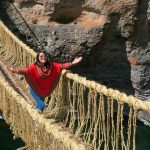
Qeswachaka: The Q’eswachaka Bridge is a jewel of the Inca legacy that remains standing thanks to the tradition and efforts of local communities. Here is some detailed information:

Summary
Discovery and History
The Q’eswachaka Bridge has existed since Inca times and is part of the Qhapaq Ñan road network. Its annual maintenance and renovation have allowed this structure to survive for over 600 years.
Location and Geographic Area
It is located in the Quehue district, Canas province, in the department of Cusco, Peru. It crosses the Apurímac River and is at an altitude of 3,700 meters above sea level.
Renovation and Who Carries It Out
Every year, the communities of Huinchiri, Chaupibanda, Ccollana Quehue, and Choccayhua gather to renovate the bridge in a four-day event. This process follows the Inca work model called Minka, which combines communal effort with ancestral rituals.
How to Get to Q´eswachaca
From Cusco, you can arrive by car or on an organized tour. The trip takes approximately 3 hours and passes through spectacular landscapes.
Latest Research
The bridge has been the subject of studies on its traditional engineering, its impact on the community, and its importance as an Intangible Cultural Heritage of Humanity since 2013.
Tips for Visiting
– Acclimatization: The altitude is considerable, so it is advisable to acclimatize in Cusco before visiting.
– Ideal Time: The annual renovation takes place in June, making this the best time to visit.
– Appropriate Clothing: Bring warm clothing and comfortable walking shoes.
Characteristics of the Nearby Population
The nearby communities maintain Inca traditions and depend on agriculture and tourism. They are known for their hospitality and for preserving ancient techniques.
Tourism and Cultural Activities
Tourism has grown in the area, with visitors coming to see the bridge’s renovation and participate in local festivities. In addition, there are traditional dances and traditional cuisine.
Flora and Fauna
The area is surrounded by Andean landscapes, with vegetation such as ichu (thatch used for the bridge) and fauna such as vicuñas, condors, and foxes.
If you decide to visit Q’eswachaka, you will stand before one of the last Inca structures still in use, a testament to the resilience and living culture of the Andes.
Bridge Renovation
The reconstruction process takes four days and follows traditional Inca techniques:
– Ichu Harvesting: The community collects ichu straw, a durable fiber from the Andes.
– Rope Preparation: Long ropes of q’eswa (straw) are braided through community work.
– Bridge Structure: The old base is replaced with new ropes, ensuring its strength.
– Inauguration and Festival: Celebrated with dances, music, and rituals of gratitude to Pachamama.

Traditional Festivals and Dances
– Qhapaq Qolla Dance: Represents trade between the high and low Andes.
– Chunchu Dance: Symbolizes the connection with the Amazon.
– Renewal Festival: Every June, it is celebrated with dances, flute music, and drums.

Local Gastronomy
If you visit Q’eswachaka, try:
– Merianda: A festive dish with guinea pig, oyuco puree, pumpkin toast.
– Chuño Cola: A traditional soup with chuño and dried meat.
– Caldo de Cabeza: An energizing and traditional drink in high Andean communities.
Alternative Routes to Arrive
If you want a different kind of trip, you can:
– Take a tour: They depart from Cusco with specialized guides.
– Travel on your own: Rent a car and explore Canas, Quehue, and other nearby towns.
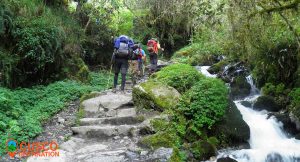
– Hiking: There are trails that allow you to walk and explore the Andean landscape before arriving.
Daily Life in Nearby Communities
The communities maintain a lifestyle based on agriculture, weaving, livestock farming, and respect for ancestral traditions. They live in harmony with nature and preserve Inca customs such as communal work (Minka).
Full-Day Itinerary – Q’eswachaka
- 4:30 – 5:00 AM | Pickup in Cusco
– Departure from your hotel in Cusco via tourist transportation.
– Travel to the South Valley, passing through traditional villages. - 7:30 AM | Breakfast in Cusipata
– Stop at a local restaurant for a traditional breakfast.
– Time to rest and acclimatize. - 8:30 AM | Visit to the Four Lagoons
– Pomacanchi Lagoon: The largest, with calm waters and Andean birds.
– Acopia Lagoon: Surrounded by farming communities.
– Asnaqocha Lagoon: With mountainous landscapes and clean air.
– Pampamarca Lagoon: Home to various bird species. - 9:30 AM | Combapata Viewpoint
– Brief stop to enjoy panoramic views of the valley. - 10:30 AM | Arrival at the Q’eswachaka Bridge
– Explanation of the bridge’s history and renovation.
– Time to cross the bridge and take photographs.
– Unique experience of walking on an Inca structure that’s over 600 years old. - 11:30 AM | Visit to the House of Túpac Amaru II
– Explore the house of the indigenous leader who fought against the Spanish colony.
– Historical background on the Andean resistance. - 12:30 PM | Lunch in Cusipata
– Typical Andean lunch at a local restaurant.
– Recommended dishes: Chiri Uchu, Caldo de Cabeza, Chuño Cola. - 2:00 PM | Return to Cusco
– Return trip with spectacular views of the Andes.
– Last stop at the Colonial Bridge of Combapata. - 5:00 – 5:30 PM | Arrival in Cusco
– End of the tour and return to the hotel.
This itinerary will allow you to immerse yourself in the history, culture, and landscapes of the Peruvian Andes.
To fully enjoy your tour to Q’eswachaka, here are some recommendations on what to bring:
Clothing and Accessories
✅ Warm, layered clothing (the weather can change quickly)
✅ Comfortable walking shoes with good traction
✅ Hat, sunglasses, and sunscreen (the radiation in the Andes is intense)
✅ Rain poncho (especially if you visit during the wet season)
Equipment and Useful Items
✅ Camera or cell phone with enough battery (the views are breathtaking)
✅ Cash (some communities don’t accept cards)
✅ Small backpack (to carry your things comfortably)
✅ Snacks and water (hydration is key at altitude)
Extras for a Better Experience
✅ Coca leaf or altitude sickness pills
✅ Notebook and pen (if you like to write down interesting facts)
✅ Respect for the local culture (avoid touching the bridge without permission and follow community instructions)
If you plan to visit During the bridge renovation in June, I also recommend wearing comfortable clothing to enjoy the cultural events.