The offering to Pachamama (Pago a la Pachamama), also known as the offering to the Earth, is an ancestral ceremony practiced in various regions of Peru, especially in the Andes. This ritual is a manifestation of gratitude to Mother Earth for her generosity and abundance, seeking to maintain a harmonious and reciprocal relationship with nature. It is a clear example of the union of two religions, European and American.

Summary
Origins and Meaning
The practice of offering to Pachamama dates back to pre-Inca times and was adopted and spread by the Incas. Pachamama, which in Quechua means “Mother Earth,” is considered a female deity who represents the earth, fertility, and life itself. The ritual symbolizes the reciprocity between humans and nature, where people offer the earth the best of their crops and produce as a token of gratitude and to ensure future blessings.
Items and Offerings Used
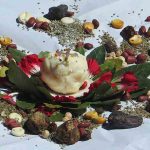
The offerings, known as “despachos,” include a variety of items that represent the gifts of the earth and the aspirations of the participants. Commonly used items include:

- Coca leaves: Considered sacred, they act as mediators between the human and spiritual worlds.
- Seeds and grains: They symbolize fertility and the abundance of harvests.
- Chicha de jora: A fermented corn beverage used in traditional ceremonies.
- Wine and liquors: Offered to invoke joy and celebration.
- Sweets and candies: Represent the pleasures and sweetness of life.
- Animal fat and llama fetuses (sullu): Elements that symbolize life and animal fertility.
- Huairuros: Red and black seeds used for protection and good luck.
Ritual Procedure
The ceremony is led by an Andean priest or shaman, who begins the ritual by preparing the despacho on a ceremonial blanket. Each element is carefully arranged while prayers are recited in Quechua, thanking and requesting protection from Pachamama. Once the offering is complete, it can be buried or burned, depending on local traditions, as a symbolic act of giving back to the earth. The ceremony typically culminates with a community celebration that includes food, music, and dance, strengthening social ties and respect for nature.
Time and Places of Celebration
Although the offering to Pachamama can take place at any time of the year, it is especially common during the month of August, considered the month of Pachamama. August 1st is particularly significant, with celebrations in various Andean communities in Peru. Regions such as Cusco, Puno, and Apurímac are known for keeping these traditions alive, attracting both locals and tourists interested in participating in these cultural experiences.
Participation and Tourism
Tourist interest in the offering to Pachamama has grown in recent decades, becoming an attraction for visitors seeking a deeper spiritual and cultural connection with Andean traditions. Travel agencies in Cusco and other regions offer experiences that allow travelers to participate in these ceremonies, always under the guidance of respected local shamans. It is essential that these practices be carried out with respect and authenticity, avoiding excessive commercialization that could distort their original meaning.

Tips for Participating in the Ritual
If you are interested in participating in an offering to Pachamama, consider the following recommendations:
Cultural Respect: Approach the ceremony with an attitude of respect and openness, recognizing its spiritual importance for local communities.
- Authenticity: Seek out authentic experiences facilitated by shamans or Andean priests recognized by their community.
- Contribution: If possible, bring small local products to add to the offering, such as coca leaves or seeds, demonstrating your active participation in the ritual.
- Appropriate Attire: Dress comfortably and appropriately for the climatic conditions of the Andean region.
- Photographic Consent: Ask for permission before taking photographs or recording videos, respecting the privacy and sacredness of the moment.
Recent Research and Cultural Revaluation
Contemporary studies have explored how the offering to Pachamama has adapted in a globalized world, facing challenges such as modernization and tourism. Research indicates that, although tourism has introduced changes in the practice, it has also served as a platform for the revaluation and preservation of these ancestral traditions. The conscious and respectful participation of visitors can contribute to the continuity and appreciation of these ceremonies in the current context.
Conclusion
The offering to Pachamama is a profound expression of the Andean worldview, emphasizing the interconnectedness and reciprocity between human beings and nature. Participating in or witnessing this ritual offers a unique opportunity to understand and value the traditions that have endured throughout the centuries in Peru. By approaching these practices with respect and authenticity, we not only honor Pachamama, but also the communities that keep their cultural heritage alive.

You might also like