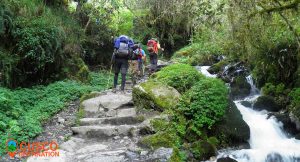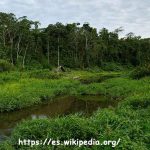
Manu National Park, a natural gem in Peru with more than 1,000 bird species, ancient indigenous communities, and landscapes ranging from the Andean puna to the tropical rainforest. Includes a detailed itinerary, travel tips, and cultural activities.
Summary
🗺️ Where is Manu National Park?
Located between the departments of Cusco and Madre de Dios, Manu National Park covers more than 1.7 million hectares. Its altitude ranges from 300 meters above sea level in the lowland jungle to 4,000 meters above sea level in the Andean puna, allowing for unique ecological diversity.
📜 History of Manu: From Ancestral to Protected
– Indigenous peoples: the Machiguenga, Yine, Matsigenka, and Huachipaeri have inhabited this region for centuries.
– Colonial Explorations: Since the 16th century, explorers like Juan Álvarez Maldonado attempted to access its mysterious lands.
– Official Protection: In 1973, it was declared a National Park, and in 1987, UNESCO recognized it as a World Heritage Site.
🚐 How to get to Manu National Park
From Cusco:
– Land route: Cusco → Paucartambo → Acjanaco → Pillcopata → Boca Manu (10–12 hours by 4×4)
– Air route: Charter flight to Boca Manu (dry season only)
From Puerto Maldonado:
– Cruise along the Madre de Dios River to its confluence with the Manu River.

🌳 Flora of Manu: A natural botanical garden
– More than 1,650 species of trees
– 750 species of orchids
– Medicinal plants such as cat’s claw, ayahuasca, and chuchuhuasi
– Ecosystems: Cloud forests, tropical rainforest, Andean puna
🐾 Fauna of Manu: The kingdom of wildlife
– 1,000+ species of birds (including the cock-of-the-rock and macaws)
– 228 mammals (jaguar, otter, woolly monkey)
– 158 amphibians and 132 reptiles
– Vibrantly colorful insects and butterflies

Source: https://es.wikipedia.org/
The Cock-of-the-Rock
It is a species of passerine bird in the Cotingidae family, famous for its vibrant plumage and spectacular courtship behavior. It is the national bird of Peru and is found primarily in the humid forests of the eastern slopes of the Andes, between 500 and 2,400 meters above sea level.
Physical Characteristics
• Marked sexual dimorphism:
• The male has bright orange plumage, black wings, and a striking semicircular crest.
• The female is more discreet, with dark brown plumage and a smaller crest.
• Size: Between 30 and 35 cm in length.
• Weight: Approximately 200 to 220 grams.
• Life expectancy: Between 5 and 7 years
Habitat and Distribution
It inhabits cloud forests and ravines, known as Yungas. Its distribution ranges from western Venezuela to Bolivia, passing through Colombia, Ecuador, and Peru. In Peru, it is commonly seen in areas such as Manu National Park, the Pui Pui Protected Forest, and the Oxapampa-Ashaninka-Yanesha Biosphere Reserve.

Source: https://es.wikipedia.org/
🔬 Recent research in Manu
– Discovery of new species of amphibians and butterflies
– Studies on carbon stored in primary forests
– Conservation projects with indigenous communities
🧭 Key tips for visiting Manu
– Best time: April to November
– Climate: Humid tropical climate, between 5°C and 30°C
– Essentials: Insect repellent, binoculars, hiking boots, waterproof clothing
– Health: Yellow fever vaccination and malaria prevention
– Guide: Mandatory in protected areas
🏘️ Communities near Manu

Source: https://es.wikipedia.org/
– Machiguenga, Yine, Matsigenka, Huachipaeri
– Sustainable practices: Agriculture, fishing, traditional medicine
– Rituals such as Pago a la Tierra (Payment to the Earth) and solstice celebrations
🎭 Tourism and cultural activities in Manu
Tourism:
– Scientific (core zone)
– Specialized (reserved zone)
– Community (buffer zone)
Activities:
– Bird and mammal watching
– Jungle hikes
– River boating
– Nature photography
– Indigenous craft workshops
🕓 Detailed Itinerary (5 days / 4 nights)
Day 1: Cusco – Paucartambo – Pillcopata
• 5:00 AM: Departure from Cusco
• 8:00 AM: Breakfast in Huancarani
• 10:00 AM: Tres Cruces Viewpoint
• 1:00 PM: Lunch in Paucartambo
• 4:00 PM: Arrival in Pillcopata
• 7:00 PM: Dinner and overnight
Day 2: Pillcopata – Boca Manu – Cocha Salvador
• 6:00 AM: Breakfast
• 8:00 AM: River Navigation
• 12:00 PM: Lunch in Boca Manu
• 3:00 PM: Arrival in Cocha Salvador
• 5:00 PM: Night Walk
Day 3: Jungle Exploration
• 6:00 AM: Wildlife Watching Birdwatching
• 9:00 AM: Hike along trails
• 12:00 PM: Lunch
• 3:00 PM: Wildlife observation
• 7:00 PM: Dinner and ecological talk
Day 4: Cocha Otorongo – Indigenous community
• 7:00 AM: Breakfast
• 9:00 AM: Visit to Cocha Otorongo
• 2:00 PM: Interaction with the Machiguenga community
• 6:00 PM: Traditional dinner
Day 5: Return to Cusco
• 6:00 AM: Breakfast
• 8:00 AM: Navigation and ground transportation
• 1:00 PM: Lunch in Paucartambo
• 6:00 PM: Arrival in Cusco