Detailed and structured content on Puca Pucara, covering all the aspects you mentioned. We’ll explore its history, location, access routes, recent research, tourism, cultural activities, flora and fauna, and a comprehensive itinerary to make your guide as complete as possible.

Complete Guide to Puca Pucara: The Red Fortress of the Incas
Summary
Introduction
Puca Pucara is an Inca archaeological site located in the Cusco region of Peru. Its name in Quechua means “Red Fortress,” due to the color of its stones at sunset. Its primary function is still a matter of debate, but it is believed to have been a military outpost, a resting area for travelers, and possibly a ceremonial site. Its proximity to Tambomachay suggests a connection with the system of defense and control of the valley.
Discovery and History
Puca Pucara was discovered and documented by explorers and archaeologists in the 19th century. However, its existence was well known to local residents long before that. Its architecture reflects the Inca’s strategy of territorial expansion and the importance of Cusco as a political and administrative center.
Inca Period
– Its construction is associated with the Pachacútec period (1438–1471), although it may have existed at an earlier stage.
– It is believed to have functioned as a lookout post to secure access to Tambomachay, which was a ceremonial center associated with water.
– Its walls and structures display typical features of Inca architecture: terraces, roads, plazas, and enclosures with administrative and residential functions.
Colonial Period and Discovery
– During the Spanish conquest, Puca Pucara’s importance declined, although some records mention its use as an occasional military refuge.
– Beginning in the 19th century, explorers began to document it in archaeological studies, until it became established as a tourist attraction in the 20th century.
Location and Geographic Area
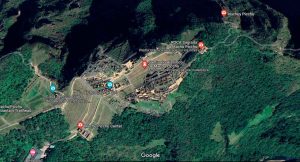
Puca Pucara is located 7 km northeast of Cusco, on the route to Tambomachay.
– Altitude: Approximately 3,850 meters above sea level.
– Climate: Cold and dry, with temperatures that can drop considerably at night.
– Geography: It is located on a hill with panoramic views of the Cusco Valley and surrounding areas.
How to Get to Puca Pucara
There are several ways to reach this archaeological site:
Transportation Options
– Public Transportation
– You can take a colectivo or bus from Cusco to Tambomachay.
– From Tambomachay, it is possible to walk to Puca Pucara in a few minutes.
– Taxi or Private Transportation
– This is the fastest and most comfortable option, ideal if you want to visit other nearby sites in the same day.
– Trekking or Hiking
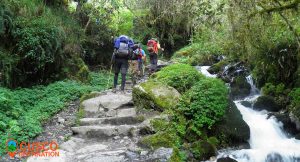
– For hiking enthusiasts, it is possible to walk from Cusco, enjoying the Andean landscape and visiting other archaeological sites along the way.
Latest Puca Pukara Research
Recent research has revealed several interesting aspects about Puca Pucara:
– Military and Administrative Function: Structures have been identified that suggest access control and housing for officials.
– Ceremonial Elements: Some stones and enclosures show evidence of rituals, suggesting possible ceremonial use.
– Connections to other sites: Studies have confirmed its connection to Tambomachay and the Inca trail to the jungle.
Important Tips for Visiting
– Bring warm clothing: The altitude makes temperatures cold.
– Sun protection: The sun can be strong, especially at midday.
– Hydration: It is advisable to bring water to avoid altitude sickness.
– Tourist Ticket: Puca Pucara is part of Cusco’s tourist circuit, and an entrance ticket is required.
Characteristics of the Nearby Population
The communities near Puca Pucara maintain many Andean traditions.
– Economic Activities: Agriculture, livestock, tourism, and crafts.
– Traditions: Local festivals, traditional dances, and ceremonies such as Pago a la Tierra (Payment to the Earth).
– Language: Primarily Quechua and Spanish.
Tourism in Puca Pucara
Puca Pucara is part of the Cusco tourist circuit, along with sites such as Tambomachay, Qenqo, and Saqsayhuamán. It is an ideal destination for those interested in Inca architecture and natural landscapes.
Cultural Activities, Flora, and Fauna

Cultural Activities
– Andean rituals and local festivities.
– Traditional dance performances.
Flora and Fauna
– Flora: Ichu (Andean grass), queñua, and wild flora adapted to the altitude.
– Fauna: Llamas, alpacas, condors, and various Andean birds.
Puca Pucara, due to its strategic location on a hill with panoramic views, played a key role in the Inca communication system. It is believed that the Inca used visual signals and messengers to transmit information between Puca Pucara and other nearby sites, such as Saqsayhuamán and Tambomachay.
Communication Methods at Puca Pucara
– Visual Signals:
– The elevated location allowed the use of smoke or fire signals to warn of military movements or important events.
– Obsidian mirrors could also be used to reflect sunlight and send messages over long distances.
– Chasquis Messengers:
– The chasquis, highly trained Inca runners, carried messages between Puca Pucara and other strategic points.
– These messengers traveled the Inca roads at great speed, ensuring the rapid transmission of information.
– Inca Road Network:
– Puca Pucara was connected to the extensive Qhapaq Ñan network, the Inca road system, facilitating communication with Cusco and other regions.
– The roads allowed for the efficient transport of messages, goods, and troops.
– This communication system was essential for the administration of the empire and the defense of Cusco.
Detailed Itinerary
Here is a suggested itinerary:
Full One-Day Itinerary
| Hour | Activity |
|---|---|
| 08:00 AM | Departure from Cusco by tourist transport. |
| 08:30 AM | Arrival at Puca Pucara, tour and exploration of the site. |
| 09:30 AM | Hike to Tambomachay. |
| 10:30 AM | Explore Tambomachay and rest. |
| 11:30 AM | Return to Cusco or continue to Qenqo and Saqsayhuamán. |
Conclusion
Puca Pucara is an archaeological site of great importance in the Cusco region. Its strategic location, military function, and possible ceremonial use make it an essential destination for understanding the territorial organization of the Incas.

You might also like